
A client wrote to us last spring with a question we hear more often than almost any other: what are the best gay beaches in the world, the kind of places where he and his partner wouldn’t have to think twice before holding hands? It’s a fair thing to ask. A beach day for two men involves a small mental calculation that straight couples rarely have to make — where can we actually relax, and where do we need to stay guarded?
By “gay beach,” we don’t just mean a stretch of sand that happens to attract a gay crowd on a sunny weekend. We mean somewhere the welcome is built in — locally owned businesses that fly the flag without irony, staff who don’t blink at two men sharing a towel, and enough of a community presence that you’re not the only same-sex couple in sight. That combination is rarer than people assume, and it’s worth understanding before you book anything.
What Makes a Beach Destination Right for a Gay Couple
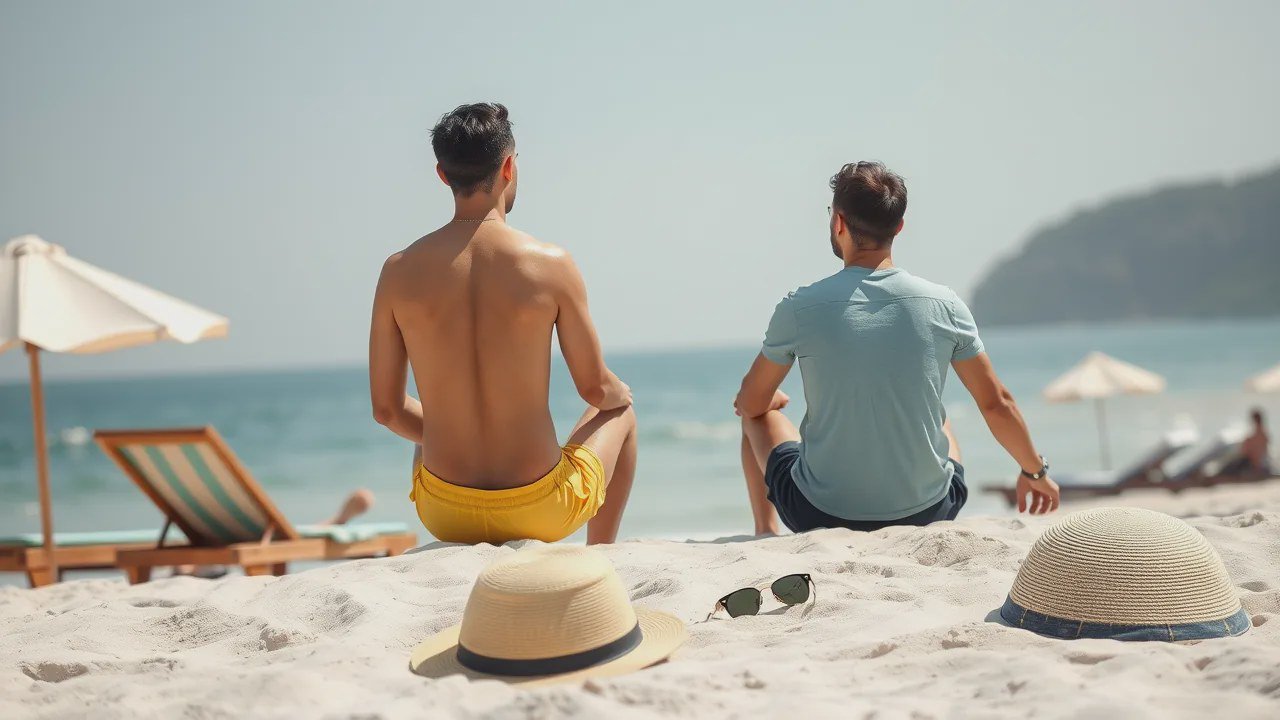
Scenery gets most of the attention in travel articles, and we understand why — a turquoise bay photographs beautifully. But scenery alone has never been the deciding factor for the couples we work with. What actually determines whether a beach trip works is whether both partners can drop their guard, and that comes down to three things: genuine welcome, practical safety, and a visible sense of community.
Genuine welcome is easy to spot once you know what to look for. It shows up in small details — a beach bar with a rainbow sticker that’s been there for years rather than slapped on for Pride month, a hotel that lists a same-sex couple’s room without needing you to specify “friend,” staff who say “your partner” instead of stumbling over pronouns. None of that is decorative. It tells you the place has hosted enough gay couples that it no longer requires explanation.
Practical safety is the less romantic part of the conversation, but we’d rather raise it honestly than let a couple find out the hard way. Local laws still vary enormously — same-sex relationships remain criminalized in a number of countries, a reality tracked closely by organizations that study LGBT tourism worldwide — and even where the law is neutral, cultural attitudes on the ground can differ sharply from what a resort’s marketing suggests. Before we recommend anywhere, we check not just whether a destination is legally safe, but whether it’s socially comfortable for two men to be affectionate in public.
When a client asks about somewhere we haven’t sent anyone before, we start with the basics: any legal risk, any recent shift in local politics, and what actual gay travelers are saying in forums and reviews rather than what the tourism board’s brochure claims. It’s a slower way to research a trip, but it saves people from arriving somewhere that looks perfect online and feels tense in person.
The third piece, community, is the one people underestimate. There’s a particular kind of relief in being at a beach where you’re not the exception. You stop performing straightness by default, stop doing the quick scan before reaching for your partner’s hand. That relief has a real effect on a relationship — couples we’ve worked with consistently describe feeling closer after a trip where they didn’t have to manage how they appeared to strangers. It’s the difference between a vacation and an actual reset, which is part of why we spend so much time curating a getaway that’s actually built around the two of you rather than handing over a generic itinerary.
The Best Gay Beaches in the World That Travelers Keep Coming Back To

Some destinations earn their reputation over decades, not seasons, and that history matters more than a fresh coat of paint on a beach club. Sitges, just south of Barcelona, is one of the clearest examples — it has drawn a gay crowd since the 1960s, and the local infrastructure, bars, guesthouses, an actual year-round scene, reflects that long history rather than a recent marketing push. Mykonos, in Greece, plays a similar role in the Mediterranean, particularly around its Super Paradise beach, though it leans louder and more party-driven than Sitges does.
A few other names come up constantly in the conversations we have with clients planning a trip:
- Fire Island Pines, off the coast of New York, which has almost no cars and a rhythm built entirely around the beach and the boardwalk between houses.
- Maspalomas, on Gran Canaria, known for its dunes and a beach culture that runs year-round rather than just in peak summer.
- Puerto Vallarta’s Blue Chairs area in Mexico, a genuinely warm, walkable stretch that works well for couples who want a Latin American base without sacrificing comfort.
- Provincetown, at the tip of Cape Cod, which has a slower, more New England pace and suits couples who’d rather read on a porch than dance until 4am.
Not every couple wants the well-known names, though, and we’d argue there’s a strong case for the quieter alternatives. Smaller Greek islands away from Mykonos, a handful of secluded coves in Ibiza that never make the party lists, or a low-key town on Portugal’s Algarve coast can offer the same underlying welcome without the spectacle — fewer crowds, and often a noticeably smaller bill. If your idea of a good beach day is two chairs, a shared umbrella, and nobody nearby, we’d usually steer you toward one of these rather than the headline destinations.
Timing changes the experience too. Traveling just before or after peak season, rather than in the middle of it, tends to mean quieter beaches, shorter waits at restaurants, and noticeably lower prices at the same hotels — in our experience, often close to a third cheaper for a very similar trip. That’s worth weighing against the appeal of a livelier, more crowded high season, especially if what you actually want is time together rather than a scene.
Turning a Beach Trip Into Real Quality Time
Here’s something we’ve noticed after years of helping couples plan getaways: the destination matters less than what you actually do once you’re there. A perfect beach can still produce a forgettable trip if both people spend it scrolling on separate loungers. We’ve seen it happen at gorgeous places, and we’ve watched an ordinary beach produce one of a couple’s best weekends simply because they paid attention to each other.
This is part of why we’re such strong believers in slowing down. We wrote at length about this in our case for slow travel as a couple, and the same logic applies directly to a beach trip. Rushing between five must-see beaches in a week tends to produce photos, not memories. Staying in one place long enough to have a favorite breakfast spot, or a bartender who remembers your order, does something different — it turns the location into a shared experience rather than a checklist.
A few practical habits make the real difference, and they’re simpler than they sound. Leave one full day with nothing booked, no excursion, no reservation, just to see what you both feel like doing. Put the phones away for the first swim of the morning; that hour tends to be when the actual conversations happen, before the day fills up with logistics. And resist the instinct to book the loudest, most-reviewed resort by default — a quieter guesthouse with fewer amenities often leaves more room for the two of you to talk, which, in our experience, is the part couples remember years later.
Conclusion

The best beach getaway isn’t the one with the bluest water or the most photogenic sunset. It’s the one that leaves you feeling closer to your partner than when you left home. We’ve watched couples come back from a modest trip to a quiet cove more connected than others who spent twice as much at a famous resort, and the difference almost always comes down to intention rather than location.
If you’re weighing where to go next, we’d rather help you think through what the trip is actually for than just hand you a list of beaches. That’s a conversation our relationship coaching services are built around, and it often changes the whole plan once a couple is honest with each other about what they need from the time away.